Officials of 17 banks which gave loan to Kingfisher Airlines and UB Group are also under the agency's scanner
Experts consider Sebi's takeover code in its present form to be on a par with any foreign code governing public mergers and acquisitions.
Expressing his satisfaction over the government's move to slash fiscal deficit target, Das said it will help improve investment by the private sector as crowding out impact will be less.

'Farmers have been sent notices in which the government is threatening that if you will join the movement, then we will impound your ancestral properties.' 'We will seal your bank accounts.' 'We will revoke the passports of your kids.'

Merely bringing down the government stake below 51% may not find any taker for the PSBs. The government must bring down its holding to at least 26%, recommends Tamal Bandyopadhyay.
The benchmark BSE Sensex reclaimed the 28,000 mark, spurting by 409 points or 1.4% at 28,114 and Nifty settled above the 8,500 mark at 8,532, gains of 111 points.

The market breadth ended weak on the BSE with 2,086 shares declining and 893 shares advancing.
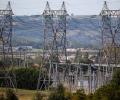
To tackle increasing demand, the Union Ministry of Power has urged central and state public-sector power-generating companies (gencos) and state power and energy departments to pick projects that are undergoing insolvency proceedings. The power ministry is looking at a quicker turnaround of these stressed power plants and enhancing power supply. Increasing demand is pushing states to scout for more power sources. "It is requested that state-owned gencos may be encouraged to participate in the corporate insolvency resolution process (CIRP) of stressed power assets, which are of strategic and commercial significance to the capacity addition plans of the states concerned.

Declining vegetable prices brought down the retail inflation to a 15-month low of 4.59 per cent in December and within the comfort zone of the Reserve Bank, government data showed on Tuesday. It is for the first time during the current fiscal that the Consumer Price Index (CPI) based inflation print is below 6 per cent or in the RBI's target range of 2 to 6 per cent. The central bank factors in the CPI-based inflation while arriving at its monetary policy. The inflation in December 2020 came down from 6.93 per cent in November, mainly on account of 10.41 per cent decline in vegetable prices over the year-ago period.
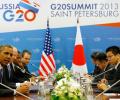
Taking on board India's concerns, the G-20 Summit on Friday acknowledged that excess volatility of financial flows and disorderly movements in exchange rates can affect economic and financial stability of emerging markets and called for sound policies to address it.

The Indian economy has recovered 'handsomely' from the pandemic-induced disruptions, former Niti Aayog vice chairman Arvind Panagariya said on Tuesday, while expressing hope that the recovery will be sustained and the growth rate of 7 to 8 per cent will be restored. Panagariya suggested that the government must now signal its intention to wind down fiscal deficit by cutting it by half-to-one percentage point in 2022-23. "The Indian economy has recovered handsomely, returning to its pre-COVID GDP... "Only private consumption is still below its pre-COVID-19 level," the eminent economist told PTI in an interview.

Cricket climate change to medical practice, dropped candidates have their non-political life sorted.

India's economic growth is estimated to have slowed down to 11-year low of 5 per cent during the current financial year ending March 2020.
Finance Minister Nirmala Sitharaman will present the much-awaited 2022-23 Union Budget on February 1. While there has been strong recovery in some sectors, touch services like hospitality, tourism and leisure continue to suffer after two Covid-19 waves. Household savings have been hit due to increased spending on health care. Consumption has still not reached pre-pandemic levels.

On the controversial AFSPA, the home minister said, "We will also think of revoking AFSPA."

Consumers during the quarter sold 37.9 tonnes of old gold, which is the highest quarterly sale after September 2016, when old gold sale, or scrap supply, was 39 tonnes.

Managing Brexit, inflation and banking reforms, along with the political environment, will be tough.
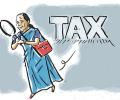
India's gross tax revenue, comprising both direct and indirect taxes between April and July, reported a growth rate of merely 2.8 per cent to Rs 8.9 trillion compared to the same period a year ago, as shown by government data on Thursday. This growth was dampened by direct tax figures, offsetting the healthy growth in goods and services tax collections and Customs duties. While net tax revenue contracted by 12.6 per cent to Rs 5.8 trillion up to July, accounting for 25 per cent of the Rs 23.3 trillion full-year target, this could be attributed to the increased tax devolution to states during the period.

ICICI Bank and SBI were among the top Sensex gainers along with FMCG majors ITC and HUL.
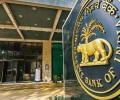
The RBI on Friday said maiden Sovereign Green Bonds (SGrBs) would be issued in two tranches for an aggregate amount of Rs 16,000 crore, and proceeds will be utilised for funding public sector projects seeking to reduce carbon emissions. The first auction would be done on January 25 while the second on February 9, the Reserve Bank of India (RBI) said in a statement. The proceeds will be deployed in public sector projects, which help in reducing the carbon intensity of the economy, it said.

A land-owning class, the Jats are a powerful community and account for 28 per cent of Haryana's population. The time, they believe, has now come for them to take revenge.

Finance Minister Arun Jaitley witll spearhead the campaign with BJP President Amit Shah as its chief strategist.
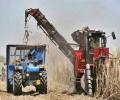
Budget should raise revenues & reduce spending to increase capital expenditure.
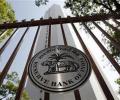
The central bank said its board of directors had approved the broad contours of the proposals.

Gold is seen as a preferred asset for all types of investors, even central banks.

Pasha, who had earlier received training in making bombs in Bangladesh, provided training to the Mangaluru blast case accused during their stay in a jail in Karnataka.

The time is ripe for a merger of eight fund houses indirectly owned and controlled by the central government, says N Sundaresha Subramanian.

After inaugurating development projects worth nearly Rs 5,000 crore for boosting the agri-economy in the Union territory, Modi said he was "elated to be among the wonderful people of Srinagar".

The two major railway unions have proposed to the government an unprecedented alternative to privatisation or inviting foreign investment, to help raise funds and improve revenue.

The government should not go in for an 'aggressive fiscal consolidation' in the upcoming Budget as global risks have not abated, RBI Monetary Policy Committee (MPC) Member Ashima Goyal said on Wednesday. Goyal further said subsidies are expected to come down as food and energy inflation moderates. WPI inflation in food articles in November was 1.07 per cent against 8.33 per cent in the previous month.

Only Rs 16,050 crore out of the Rs 15.44 lakh crore of the old high denomination notes have not returned.

More people will be literate, on the Internet, linked to the national identification scheme and likely to receive electricity, especially from alternative-energy sources.

The junior Abdullah would be banking heavily on Shia support as the constituency has many Shia dominated areas that include Budgam, Beerwah, Pattan, Sonawari and Bandipora, among other pockets.

NBFCs are mainly dependent on funding their operation from their own cash flows.

Stocks of Indian companies with exposure to Europe fell on Tuesday amid concerns about the impact on their sales in case the Russia-Ukraine crisis worsens and the US and its allies impose economic sanctions on Russia. While top conglomerates, including Reliance Industries, the Tata group, and Aditya Birla Group, said they did not have any significant exposure to Russia, executives of some of the oil and gas, pharmaceutical, and tea companies said they were monitoring the situation closely as they earned substantial income from the region. Russian President Vladimir Putin on Monday ordered troops into two breakaway regions of eastern Ukraine after announcing that Russia would recognise their independence.
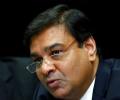
Lower inflation, FCNR(B) outflows likely to influence central bank decision
There is little scope for significant monetary easing even in the next fiscal year.
'The finance minister has messed up the economy.'

'In a serious fiscal situation like this, an ostrich-like focus on annual budgeting, event management and defensive rhetoric will only make matters worse,' warns Rathin Roy.

A glance back at some of the important ups and down Indian Inc faced in 2018.
